
Rotobrush Air Duct Cleaning in Ballard: A Homeowner’s Guide
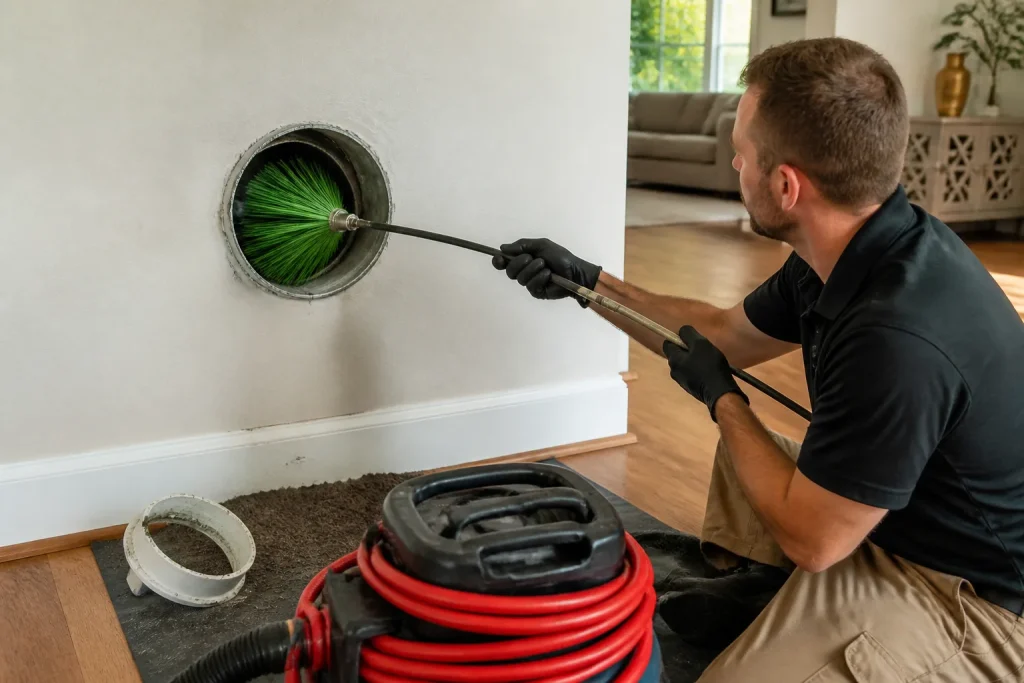
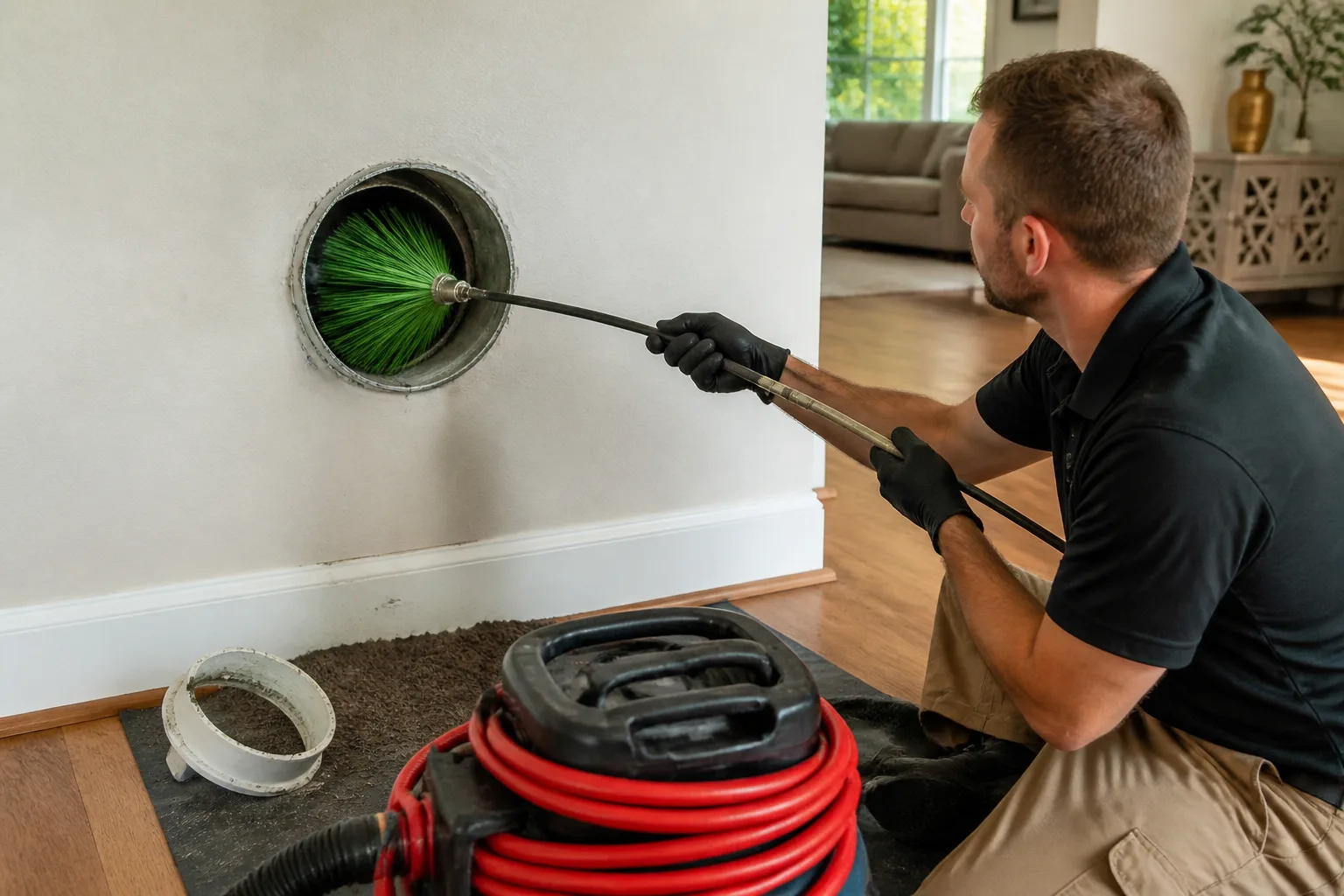
Rotobrush is a brand of contact-cleaning equipment, not a service company, and that distinction matters when you’re comparing duct cleaning quotes in Ballard. The system pairs a rotating brush head with simultaneous vacuum extraction, so debris gets loosened and pulled out at the same time instead of just blown around. If a contractor mentions Rotobrush, this guide helps you understand what that actually means and how to check they’re using it properly. If you’d rather have the conversation with someone who knows the gear, call (844) 443-4768.
Why does contact matter more than air pressure?
The Rotobrush system started in commercial HVAC work, and the reason it outperforms air-whip-only methods comes down to one physical principle: you can’t dislodge bonded debris without contact. Air whips and compressed-air tools do a good job of moving loose dust, but the stuff clinging to duct walls, especially in older Ballard homes with metal ductwork, needs something to physically touch it.
Here’s what happens mechanically. A rotating brush head moves through the duct on a flexible shaft. At the same time, a high-powered vacuum pulls air from the far end of the run. Dust gets scrubbed off the surface and immediately captured by airflow before it can settle back. Air-whip systems rely on turbulence alone. They stir things up, but without a brush making contact, the layer bonded to the duct wall stays put.
This is why a Rotobrush job should look different edge to edge. If someone air-whips a Ballard bungalow and skips contact cleaning, the ducts may look cleaner on camera for a day or two before the fine dust settles again and the homeowner is back where they started. Professional-grade equipment, residential care – that’s the idea behind pairing a Rotobrush contact system with Nikro negative-air machines on the same visit. The two work together. One loosens, the other contains and removes.
Where does Rotobrush work well, and where does it struggle?
Rotobrush shines in flexible duct and long straight runs. That covers a lot of Ballard homes, where newer builds and renovations lean heavily on flex duct because it’s faster and less expensive to install. The brush head travels smoothly, maintains consistent contact, and pulls debris efficiently through runs that don’t twist.
Where it has real limits:
- Sharp bends and tight elbows. The flexible shaft can’t always navigate a 90-degree turn cleanly, and forcing it can damage the duct. A good technician switches to hand tools or a smaller brush head rather than jamming it through.
- Damaged or torn liner. If the interior liner of flex duct is compromised, a rotating brush can make the tear worse. This is where the repair-and-sealing side of the work matters, because a cleaned duct with a torn liner is a leak waiting to happen.
- Heavily crushed sections. Where duct has collapsed or been pinched during a renovation, contact cleaning isn’t safe until the section is repaired.
Here’s the part lots of people miss: a knowledgeable technician doesn’t just run Rotobrush on everything they see. They look at the duct layout first, decide where the brush works and where it doesn’t, and switch tools accordingly. If someone tells you every inch of your system gets the same treatment, ask how they handle a sharp bend. In our experience, a technician with up to 13 years of experience will have a real answer. It’s usually a different head or a hand tool, not a shrug.
What should happen before any contact brush goes into your ducts?
Before a brush enters the system, three things should happen. These are non-negotiable, and skipping them is a sign the technician is rushing or using lower-standard gear.
- An inspection pass. The technician runs a camera through the main trunk and branch runs to see what’s actually inside. Dust load, debris type, moisture, and condition of the liner all get noted. A Ballard home with a recent kitchen remodel often has construction dust in a different place than a home that hasn’t been touched in decades.
- Breach identification. Seams, disconnected joints, and gaps around registers get flagged before cleaning starts. If a duct is disconnected, cleaning it first and sealing later just spreads debris into the cavity between the joists. The right order is identify, clean, then repair and seal.
- A pressure check. The system’s pressure balance affects airflow. If there’s a blockage or a major leak, the cleaning plan changes. Pressurizing the whole system without knowing where the leaks are means containment is guesswork.
Containment also matters. Abatement Technologies air filtration equipment, the kind used on commercial jobs, captures airborne particles during the work so they don’t migrate into the living space. That’s a commercial-standard practice applied inside a home, and it’s what separates a proper setup from someone with a shop vac and a good pitch.
How do you tell a real Rotobrush job from a sales term?
Rotobrush has become a synonym for “we do duct cleaning” in a lot of marketing, and not every crew using the name runs the actual process. Here’s how to check.
Ask what equipment arrives. A real Rotobrush job includes the contact brush system plus vacuum and containment. If a technician shows up with only a portable unit and no negative-air setup, ask directly what’s happening. That question is fair, and a professional will answer it without getting defensive.
Watch for the brush on the shaft. It’s fine to ask to see the brush head before it goes in. A proper technician will show you, and may point out what the run looks like on camera first.
Look at the register count versus the system. Cleaning one branch and calling it a whole-system job is the most common shortcut. Ask which supply and return runs are included. A house in Ballard with an older forced-air setup usually has more runs than people realize.
Ask about pre-cleaning diagnostics. If the technician skips the inspection pass and heads straight to the brush, the job is already compromised. Contact cleaning on an unknown system risks pushing debris into a disconnected section.
Professional-grade equipment is verifiable. The brand names on the actual machines (Rotobrush, Nikro for negative air, Abatement Technologies for filtration) can be checked on the unit itself. We use all three because they’re the tools commercial contractors trust, not because the names sound right in a proposal. A quick glance at the gear tells you a lot about the crew you’ve hired.
What should you see when the job is done?
Before-and-after video or photos should show the actual change inside the ducts. The most convincing proof of work is a clear look at the main trunk and at least one branch run before cleaning and the same spot after. If the before shot looks like a dust storm and the after looks like it was wiped down by hand, ask to see the full run, not a highlight frame.
Debris extraction should be visible too. A contact cleaning pulls out debris in volume. The technician should show you what came out, and it should match the inspection findings. A system with heavy dust before cleaning shouldn’t produce a thin, polite pile of debris and a shrug.
Ask about post-cleaning airflow. A properly cleaned and sealed system runs more freely at the registers. That’s a simple test the technician can help you check before they leave. It’s also where duct repair and sealing pays off. If leaks were found during inspection, sealing them after cleaning locks in the improvement. This is the “we fix what we find” part of the job, and it addresses the root cause rather than just surface cleaning.
If the home has Honeywell or Aprilaire filtration equipment and that filter was bypassed or clogged during cleaning, it should be reinstalled and checked before the crew packs up.
When should you call a pro instead of checking this yourself?
If you’re partway through this and thinking “this sounds like a lot of investigation for something I’d rather not handle,” that’s a reasonable conclusion. Diagnosing duct condition, choosing the right tool for every run, and confirming the system is properly sealed after cleaning are all jobs for someone who does this regularly.
If your Ballard home has had recent renovations, if someone in the household has allergies or respiratory concerns, or if you’re unsure whether the system has been cleaned in years, having a proper inspection is a sensible starting point. Dust removal is one piece. Filtering and sanitizing are where the health frame starts. From cleaning to sealing to sanitizing, one call handles all of it, and you won’t be hiring a second company to repair a leak the first one found.
Related services in Ballard: air duct cleaning, dryer vent cleaning, and HVAC cleaning. If you want the broader picture of how the work fits together, start with air duct cleaning Ballard.
The Bottom Line
Rotobrush is a contact-cleaning system, not a service brand, and the value is in what it does mechanically: brush contact plus simultaneous vacuum extraction. It’s excellent on flex duct and straight runs, limited at sharp bends and damaged liner, and only as good as the inspection, containment, and sealing around it. The honest way to evaluate any quote is to ask about the equipment, the pre-cleaning inspection, and the proof of debris removal. If the answers hold up, you’re talking to someone who does the work properly.
If you’re in Ballard and want a straight conversation about your ducts, Air Duct Cleaning Ballard offers free estimates – call (844) 443-4768. We answer 24/7, and fast dispatch runs from 7am to 7pm, Sunday through Friday.
Frequently Asked Questions
For bonded debris on duct walls, yes. A rotating brush makes physical contact with the surface, and the vacuum pulls loosened dust away in the same pass. Air-whip methods rely on turbulence and often don’t remove the stuff that’s stuck. That said, a proper job uses both methods together depending on the run, and a technician who claims one tool handles everything is oversimplifying.
Ask to see the equipment. The contact brush head on a flexible shaft, the vacuum unit, and containment gear like an Abatement Technologies filtration setup are all visible. Watch for the inspection pass before any brush goes into the duct. If the technician can’t show you what the inside looked like before cleaning, they’re either skipping a step or not equipped to do the job properly.
Not if the technician inspects first. The risk comes from running a rotating brush through compromised liner or crushed sections, which is why the inspection pass and breach identification come before cleaning. When damage is found, the right move is to repair or replace that section rather than push a brush through it. Ask specifically how the technician handles damaged duct before deciding.
Before-and-after visuals of the actual runs, not just the register. Ask to see the debris that came out and how it matches what the inspection found. Ask whether any breaches were sealed after cleaning. And ask if you can check airflow at the registers before the crew leaves. A technician who’s done the job properly will have all of that ready to show.
Call Air Duct Cleaning Ballard at (844) 443-4768 for a free estimate. We answer 24/7. Fast dispatch from 7am to 7pm, Sunday through Friday.
Written by the team at Air Duct Cleaning Ballard.
Need Air Duct Cleaning Help?
Call Air Duct Cleaning Ballard - the local pro we connect you with is licensed and insured, here with fast help in Ballard.
(844) 443-4768